
——The stable period is the golden window for treatment
Many vitiligo patients have this question: 'The white spots on my body haven't grown for several months, or even one or two years, and no new ones have appeared. Does that mean I can just leave them alone?'
The answer is: treatment is usually recommended, and now is actually a good time to treat them.
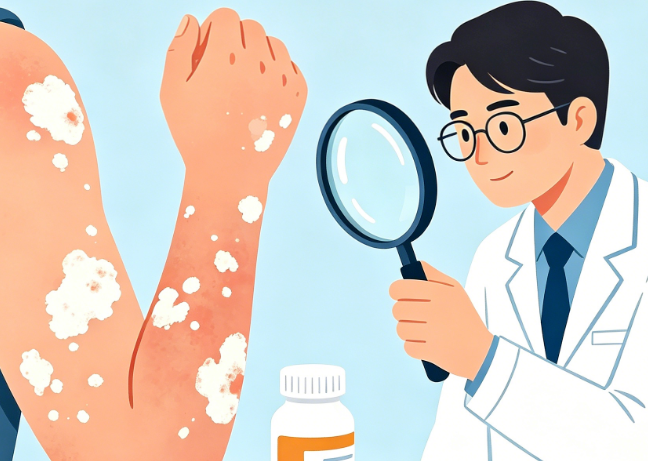
Why should 'non-proliferation' still be enforced? Three reasons to tell you
For 'Repigmentation,' Not Just 'Control'
There are two goals in the treatment of vitiligo: one is to stop it from spreading (control the condition), and the other is to restore the color of the white patches (repigmentation).
No spreading only indicates that the disease has entered a 'stable phase.' At this stage, the edges of the white patches are clear and will not expand easily. Treating at this time has a much higher success rate for repigmentation compared to the progressive phase. If treatment is abandoned, the possibility of the white patches fading on their own is very low.
Prevent future spreading
The course of vitiligo is often a cycle of 'stable—progress—stable again—progress again.' Just because it is not spreading today does not mean it won’t spread six months later.
Active treatment can regulate the immune state of the local skin and reduce the risk of future recurrence. This is a long-term health investment.
Improve appearance and enhance quality of life
Even if the white patches are not spreading, if they are on exposed areas such as the face or hands, they can still affect social life, work, and mental well-being. Achieving repigmentation through treatment can help patients regain confidence.
The most important first step: don’t judge yourself, see a doctor first
The perception of 'no spreading' may only be what the naked eye can see. Clinically, doctors use a Wood's lamp for examination. This lamp can reveal 'hidden white patches' invisible to the naked eye.
Only when no hidden white patches are detected under the Wood's lamp is it the true stable phase.
If blurry edges or white patches not visible to the naked eye are found, it indicates the disease is still quietly progressing.
Therefore, the first step should always be: go to a reputable hospital dermatology department and let professional doctors confirm whether you are truly in the stable phase.
Stable vitiligo, how to treat it?
Once the doctor diagnoses it as the stable phase, the treatment plan will be more proactive and diverse than in the progressive phase. You can discuss with your doctor according to your own situation: this is the golden period for repigmentation treatment! Active combination therapy is recommended:
Phototherapy: 308 nm excimer laser.
Topical medication combined with phototherapy: more effective than a single method.
Surgical transplantation: follicular root sheath transplantation (also applicable in the progressive phase), repigmentation is direct and obvious, with no color difference.
In daily life, please do three things well.
Regardless of whether you choose treatment or not, the following three points are very important:
Strict sun protection: Areas with white spots lack melanin protection and are very prone to sunburn and redness. When going out, apply sunscreen (SPF30 or higher), wear long sleeves, and use an umbrella.
Avoid skin trauma: Cuts, friction, scratching, and even pressure from tight clothing can trigger white spots at new injury sites (medically called the 'Koebner phenomenon').
Manage emotions: Long-term mental stress, anxiety, and staying up late may trigger or worsen vitiligo. Maintain a calm mindset and a regular routine.
Vitiligo not spreading does not mean it is 'cured', and it certainly does not mean 'no treatment is needed'. On the contrary, the stable phase is a valuable treatment window. Seizing it greatly increases the chance of repigmentation.
Please remember this action procedure:
Go to the dermatology department of a hospital → Do a Wood's lamp examination → Confirm the stable stage → Develop a plan with the doctor (topical medication/phototherapy/surgery) → Stick to treatment and daily care
If you are troubled by vitiligo, you might consider starting this weekend by making an appointment at a regular dermatology clinic. The sooner you evaluate, the sooner you can be at ease.
Disclaimer: This article is for medical science popularization and cannot replace a face-to-face consultation with a doctor. Please follow your doctor's advice for specific treatment plans.









Copyright 2025 Perennial General Hospital All Rights Reserved 津ICP备2024014168号-2  津公网安备12011102001775号